StillEngine
StillEngine is a 3D engine and editor written in C# and DirectX 11.1.
It uses SharpDX, NVIDIA PhysX and Bass audio.
Engine Features
- Physics - Using PhysX 2.8.4
- PhysX based character controller
- Audio is handled with Bass
- Shaders include; point and spot light with PCF shadow mapping, parallax mapping, reflective/refractive water and soft edged foliage
- OctTree based frustum culling
- Standard key framed animation and bone based animation
- Cameras - Arc ball, dolly, free fly with keyboard and mouse, character camera (3rd person) with geometry interaction and an orbit camera
- It uses Direct2D (and DirectWrite) for UI. UI controls include; textbox, slider, label label, surface for free drawing, buttons and windows. UI can be composed in XML markup, combined with a designer file generator for strongly typed control referencing and markup event data binding to code behind.
- Mesh Tools - Draws mesh normals as lines for debug visualisation, load COLLADA (.DAE) and Wavefront object .obj files
- Special effects - breakable wooden crates, exploding oil drums, breakable glass and smoke particle effects
- Project serialilization to XML
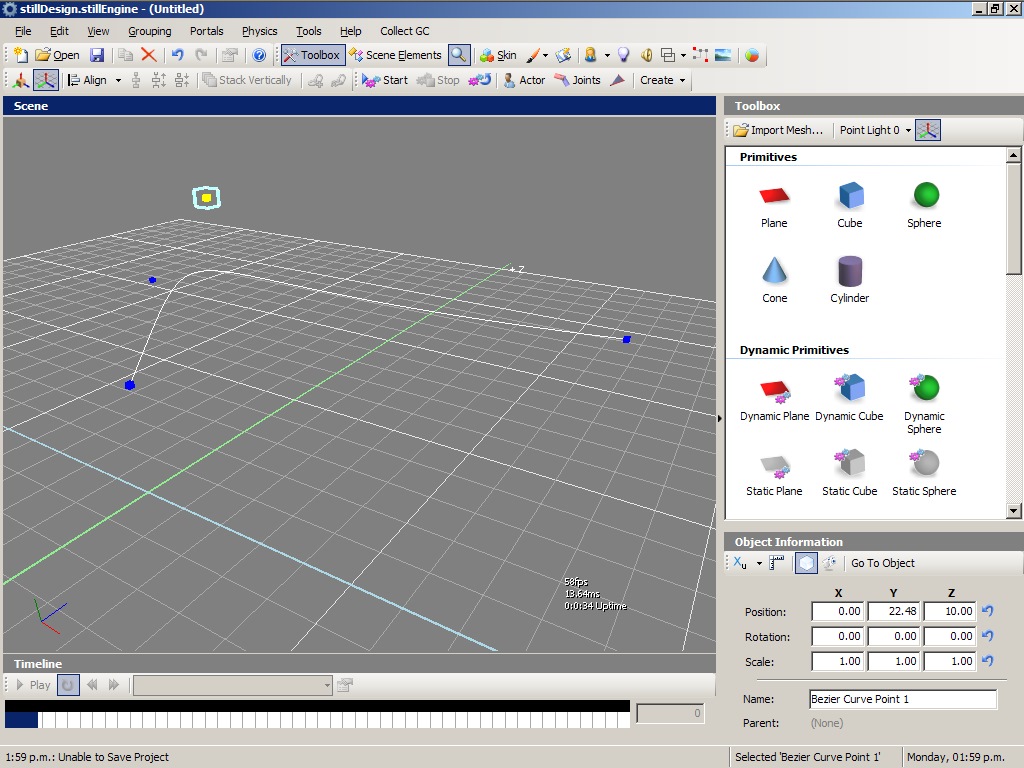
- Interactive bezier curve editor
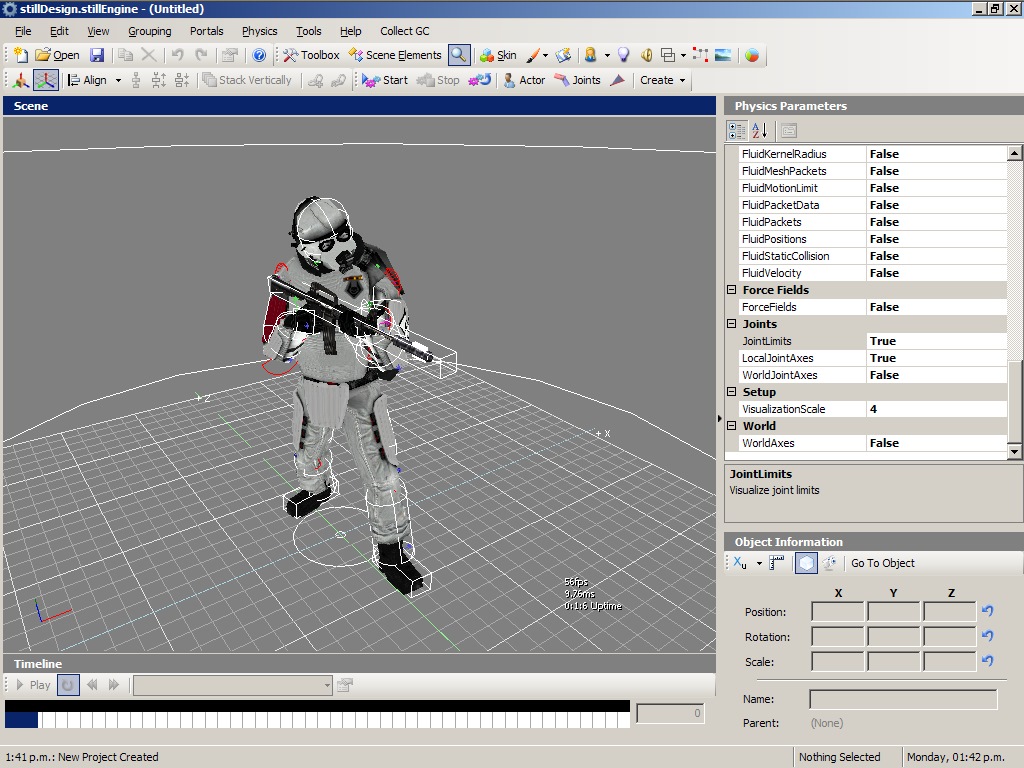
- Create Ragdoll animation/physics from exisiting animations
Editor
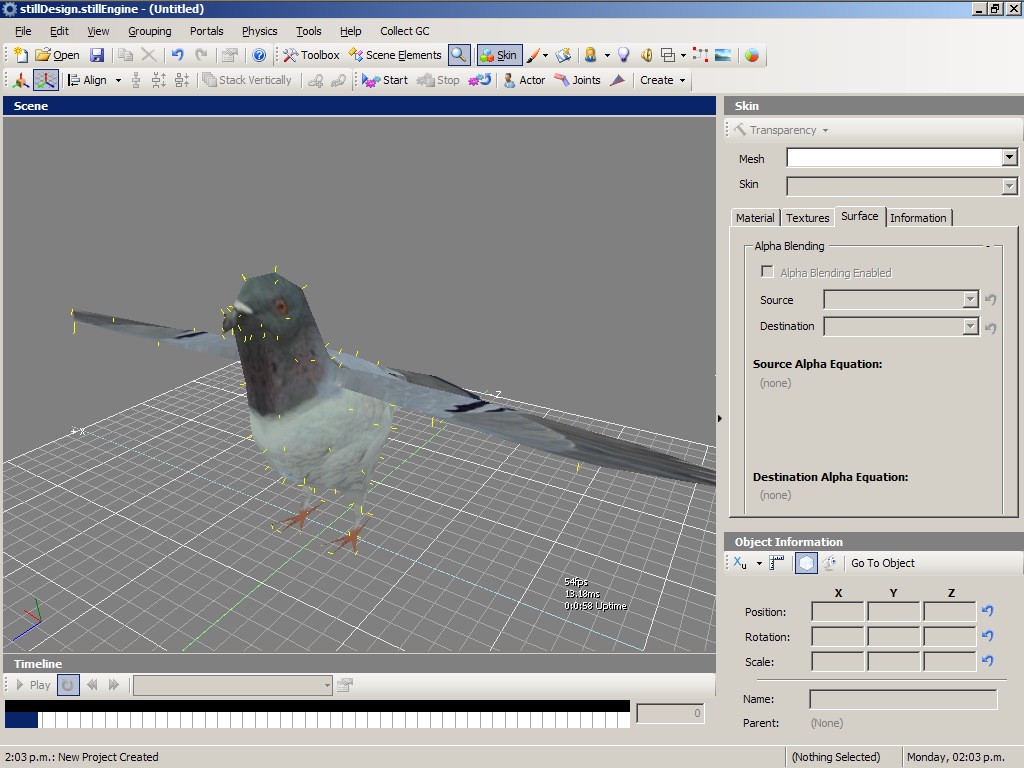
- Real time editor for manipulating scene elements
- Textures and materials can be changed at run time to make level design more interactive
- Project serialization
- Interactive physics editing and simulation
PhysX.Net
A .NET wrapper for NVIDIA PhysX:
- PhysX 2.8.4
- PhysX 3.3.1